I think we may have misunderstood an important part of how B2B sales is changing
I've been thinking about how buyers are engaging with salespeople later and later in their decision-making process, and how this means salespeople need to take on more of an expert role...
I think we may have misunderstood an important part of how B2B sales is changing.
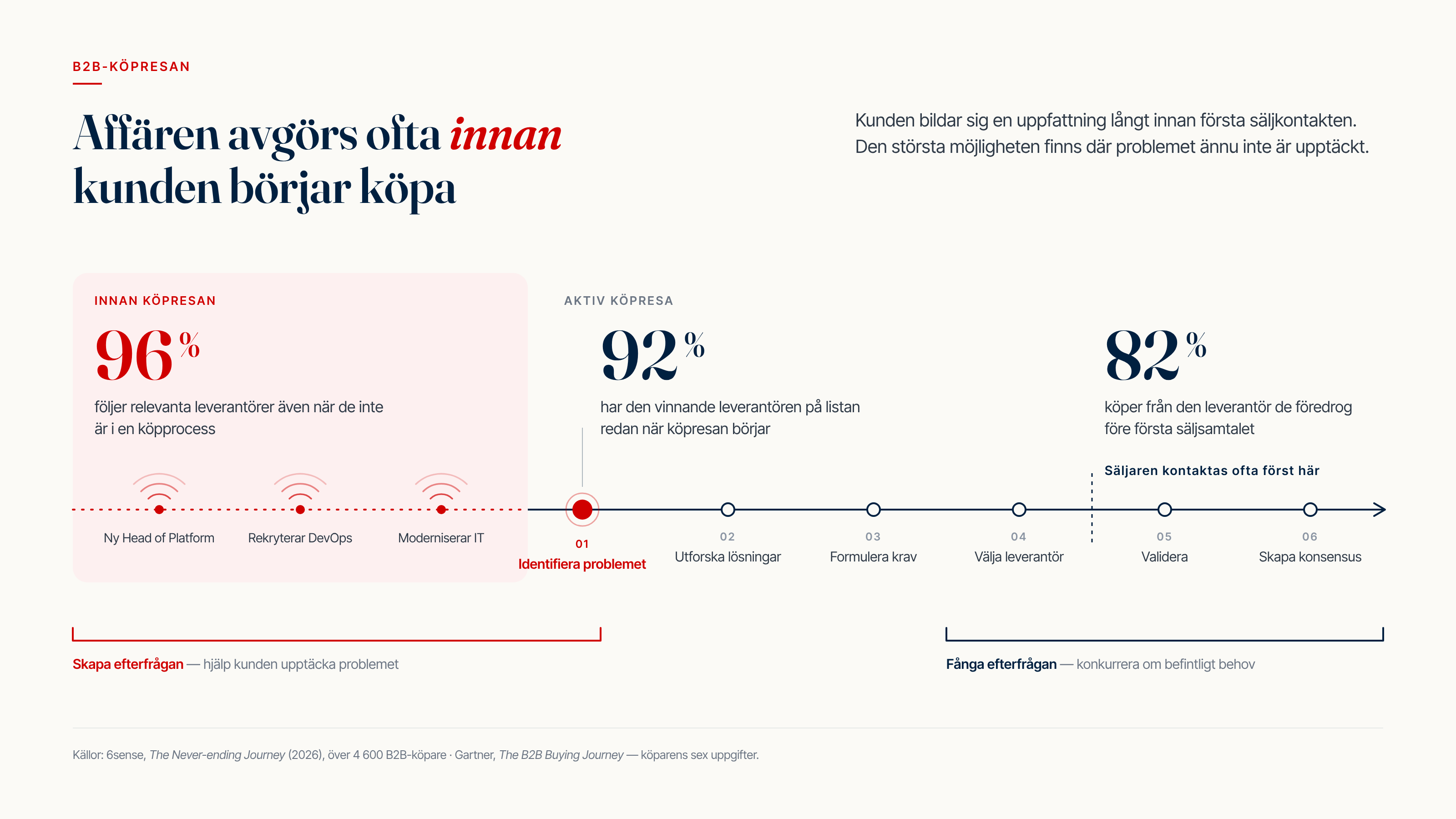
There's a lot of talk about how B2B buyers engage with salespeople much later in their buying journey.
By the time they reach out, they've already done their research, compared alternatives, and formed a pretty good idea of what they need.
As a result, salespeople need to become more knowledgeable, more consultative, and more specialised.
I agree with that.
But there's something about this argument that doesn't quite add up for me.
It assumes the customer has already identified the problem.
That someone within the organisation has recognised what's not working, understood the consequences, and started looking for a solution.
But how many business problems exist inside companies that haven't even been identified or prioritised yet?
Gartner actually describes Problem Identification as the first task in the B2B buying journey.
And I believe this presents a huge opportunity, particularly for consulting firms.
Imagine a company that has recently been acquired, hired a new executive, or started a major transformation.
None of these events necessarily means they need consulting services.
But they could signal that new challenges and needs are emerging.
A consulting firm that understands the customer's business could reach out with a relevant observation and a well-founded hypothesis.
Not to ask whether they need consultants.
But to help them explore a problem that might not even be on their radar yet.
There's a fundamental difference between selling a solution to a problem the customer has already identified and helping the customer discover a problem worth solving.
And I believe we need to become much better at the latter.
Not by sending more generic outreach emails.
But by systematically understanding what's changing within our potential customers' businesses, what challenges those changes might create, and how our expertise could help.
AI and modern technology now make it possible to identify and monitor these changes in ways that simply weren't practical before.
But it's still our experience, expertise, and understanding of the customer's business that determine whether we can turn that information into a meaningful conversation.
So perhaps the future of B2B sales isn't just about salespeople entering the buying journey later, equipped with deeper expertise.
Perhaps we also need to become much better at getting involved before the buying journey has even begun.
I'm curious how others selling consulting services see this.
How much of your sales effort is focused on responding to needs customers have already identified, versus helping them discover new ones?